Poor materials on your building site: how to spot them and defend yourself
Under-dosed concrete, rusty steel, reject tiles: material substitutions are common and hard to spot. Here are the checks a private owner can carry out.
Published on 18 March 2026 · Updated on 9 October 2026 · Reviewed against the official texts on 9 October 2026 · By Multi Service de Marrakech Junior
1. Concrete: how to check its strength
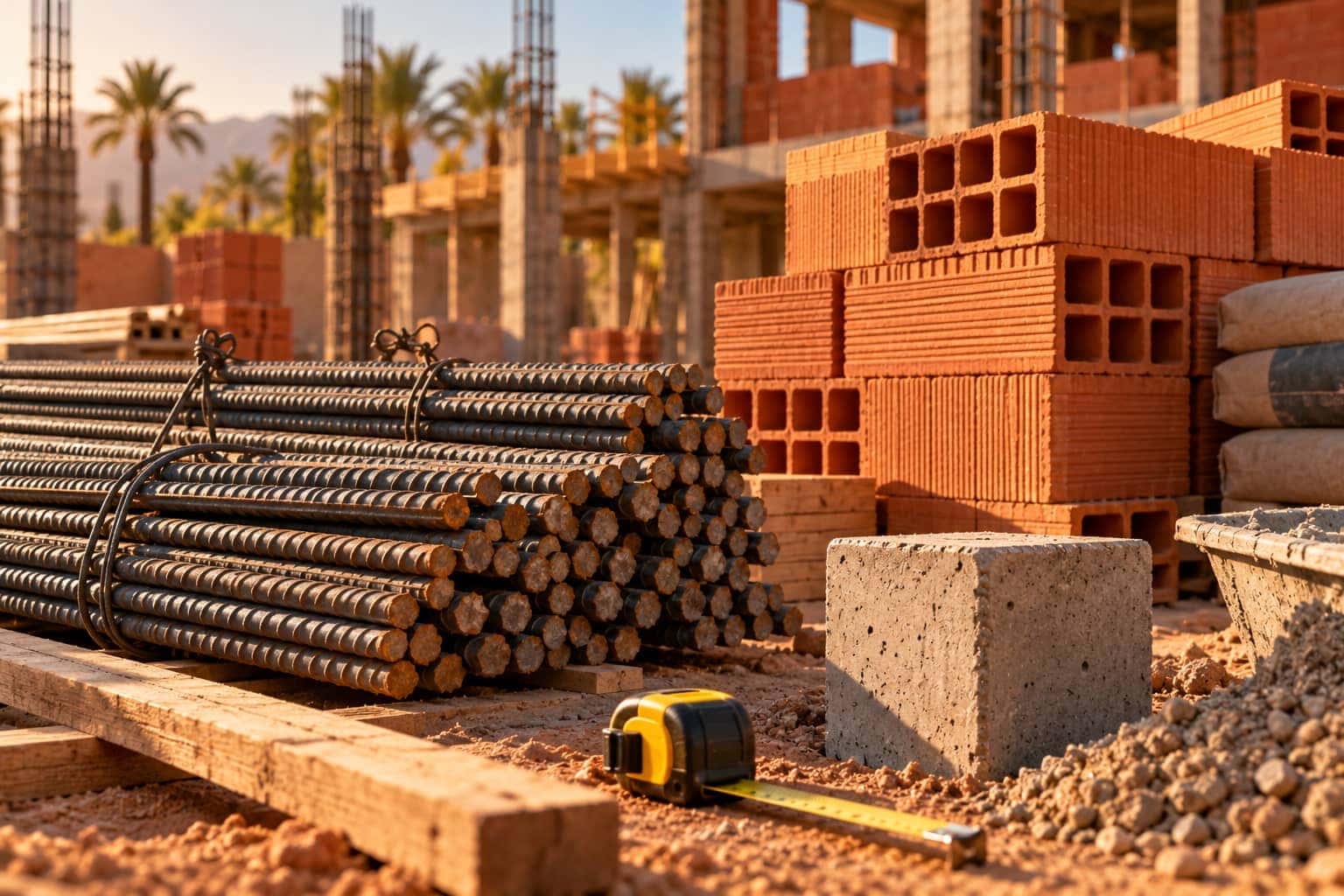
The class of structural concrete is set by the structural engineering consultancy's calculation report, commonly C25/30 (25 MPa) for a villa. Concrete with too little cement, or mixed with too much water, has a surface that crumbles easily and a lighter colour than normal. Always ask for the delivery notes from the ready-mix concrete plant — they state the mix design and the guaranteed strength.
If in doubt, core sampling by an approved laboratory measures the actual strength at limited cost. That is far cheaper than structural remedial work.
2. Reinforcing steel: signs of inferior quality
HA Fe500 high-bond steel is the standard for reinforcement. Bars must be marked with their diameter and grade. Light rust (a reddish surface) is acceptable, but deep, flaking rust reduces the cross-section of the steel and its load-bearing capacity.
Check that the diameters match the plans: a 10 mm bar instead of a 12 mm bar means a 30% reduction in cross-section. Weigh a sample and compare it with the theoretical values given in any construction handbook.
3. Tiles and finishes: simple tests
Reject or second-grade tiles are often sold as standard quality. Check the packaging for a CE marking or an NM (Moroccan standard) reference. A simple test: tap two tiles against each other — a dull sound indicates high porosity or fragility.
Keep the packaging of all materials delivered: it shows the reference, the brand and the production batch. This information is essential in the event of a dispute.
4. How to build checks into your contract
The contract should explicitly state the material references (brand, standard, strength class). Include a clause making each payment conditional on presentation of the corresponding delivery notes.
You can also reserve the right to have the materials inspected by an independent technician before they are used. This clause deters substitutions and costs nothing if everything complies.
In summary
Multi Service de Marrakech Junior documents every supply: delivery notes, technical data sheets and photos of the materials used. These documents are handed to you at handover to form your warranty file.
Sources and reference texts
- RPS 2000 seismic code (Règlement de construction parasismique), 2011 version
- Moroccan NM standards for concrete, steel and tiles (IMANOR, the Moroccan standards institute)
Cite this guide
Using this guide on your website, on a forum, for an association or in a document? Please cite the source with a link to the original page.
“Poor materials on your building site: how to spot them and defend yourself”, Multi Service de Marrakech Junior, updated 9 October 2026. https://mmj.ma/en/blog/mauvais-materiaux-chantier
This article is provided for general information and does not replace advice from a lawyer, a notary or an architect. Legislation changes: check the version in force for your situation.