The 5 most common construction scams in Morocco
Overbilling, substituted materials, abandoned sites: these practices ruin projects every year. Here is how to recognise them before it is too late.
Published on 1 May 2026 · Updated on 9 October 2026 · Reviewed against the official texts on 9 October 2026 · By Multi Service de Marrakech Junior
1. Creeping overbilling
The contractor offers a very attractive quote to win the contract, then raises the price at every stage, citing unforeseen problems. Once the foundations are poured, the owner is trapped: stopping costs more than carrying on.
The warning sign: an overall quote with no breakdown by item, or frequent amendments from the very first weeks. A serious quote lists each trade with quantities and unit prices.
2. Substituted materials
The contract specifies C25/30 concrete and HA Fe500 high-bond steel. The site receives lower-grade materials that look identical to a non-specialist. The difference only shows over time — or in an earthquake.
Always ask for the delivery notes together with the technical data sheets of the materials. Independent site monitoring, even occasional, is often enough to deter this kind of substitution.
3. Abandoning the site halfway
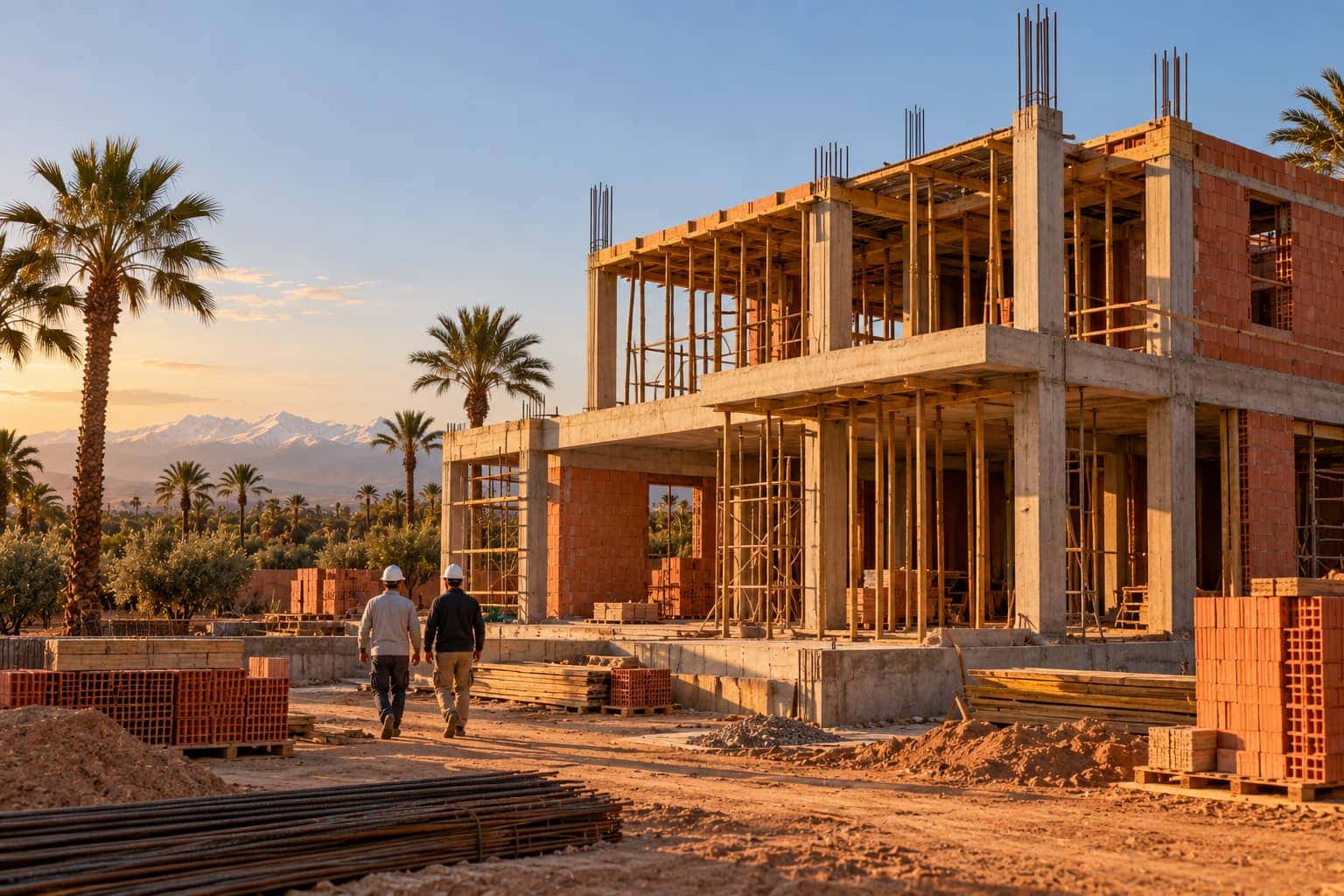
The contractor collects the first instalments, carries out the visible work, then slows down, blames “supplier problems” and eventually disappears. The owner is left with unfinished structural work (the shell) and a contractor who cannot be reached.
The most effective protection: stagger payments strictly according to actual, verified progress, never ahead of the work. Provide for a retention (retenue de garantie), often 5 to 10%, released once the snag list has been cleared.
4. Undeclared subcontracting
The contractor signs a contract, then hands everything over to unqualified, uninsured crews paid off the books. In the event of an accident or defective work, the owner has no direct recourse against these workers.
Your contract should prohibit subcontracting without prior written consent. If in doubt, ask for the payslips or proof of insurance of the crews working on your land.
5. The deliberately vague quote
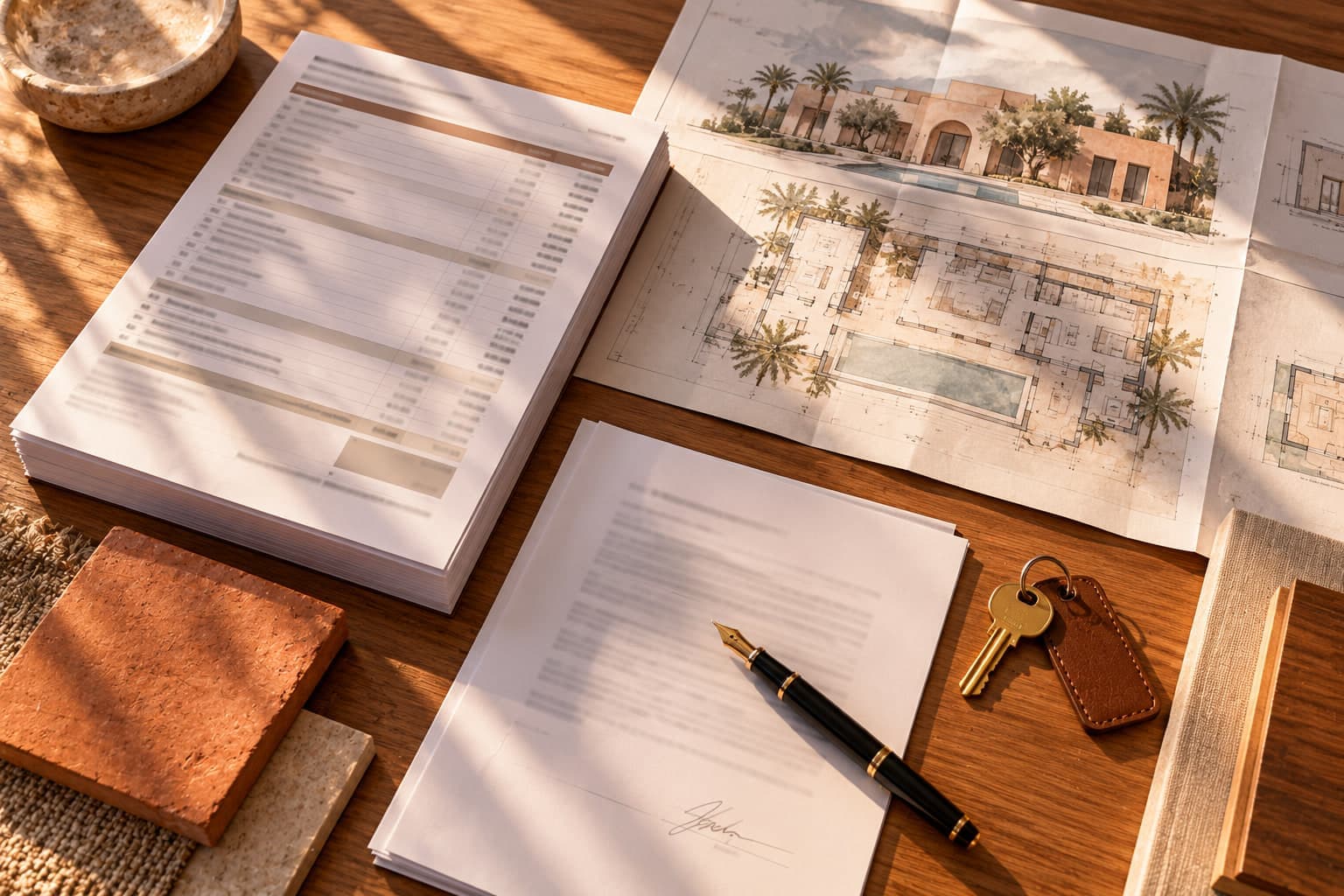
Wording such as “supply and laying of tiles of your choice” or “sanitary ware subject to availability” lets the contractor install whatever they want. Without a precise reference, you have no leverage to dispute it.
Every item in the quote should state the product reference, the brand, the dimensions and the standard. If the contractor refuses to give details, that is a strong signal.
In summary
At Multi Service de Marrakech Junior, every quote itemises the materials line by line with their references, and every payment depends on progress we have validated together. Would you like to build within a clear framework? Contact us for an initial, no-obligation conversation.
Sources and reference texts
- Code of Obligations and Contracts (DOC), articles 230 and 769
- Law 66-12 on planning and building offences
Cite this guide
Using this guide on your website, on a forum, for an association or in a document? Please cite the source with a link to the original page.
“The 5 most common construction scams in Morocco”, Multi Service de Marrakech Junior, updated 9 October 2026. https://mmj.ma/en/blog/arnaques-chantier-maroc
This article is provided for general information and does not replace advice from a lawyer, a notary or an architect. Legislation changes: check the version in force for your situation.