Building in Marrakech from abroad: how to run a project you cannot see
Moroccans living abroad and foreigners: thousands of you build in Morocco without living there. Here is how to set up the project, choose the professionals, secure payments and monitor the site remotely, week after week.
Published on 9 October 2026 · Reviewed against the official texts on 9 October 2026 · By Multi Service de Marrakech Junior
1. Before signing: the land and the paperwork
From a distance, the first risk is not the build, it is the land. Have a notary or a lawyer check the land title (titre foncier, the registered title deed), that the plot carries no mortgage and is not held in undivided co-ownership (indivision), and that it can be built on (zoning, approved subdivision). Do not pay any advance for the works until you have the building permit.
If you cannot be present to sign the deeds, a power of attorney drawn up before a notary or at the consulate allows a trusted person to sign on your behalf. Limit the power of attorney to what is necessary.
2. Choosing the professionals
A remote project needs an architect who designs the building and files the permit, a structural engineering consultancy for the structure, and a construction company to carry out the work. For each of them, check their legal existence (trade register, ICE company identifier), their insurance and, above all, how they report: how often, with what photos, how quickly they respond.
Be wary of single contacts who combine every role without a written contract. Keeping the person who designs, the one who builds and the one who checks separate is your protection when you are not there.
3. A contract that stands in for your presence
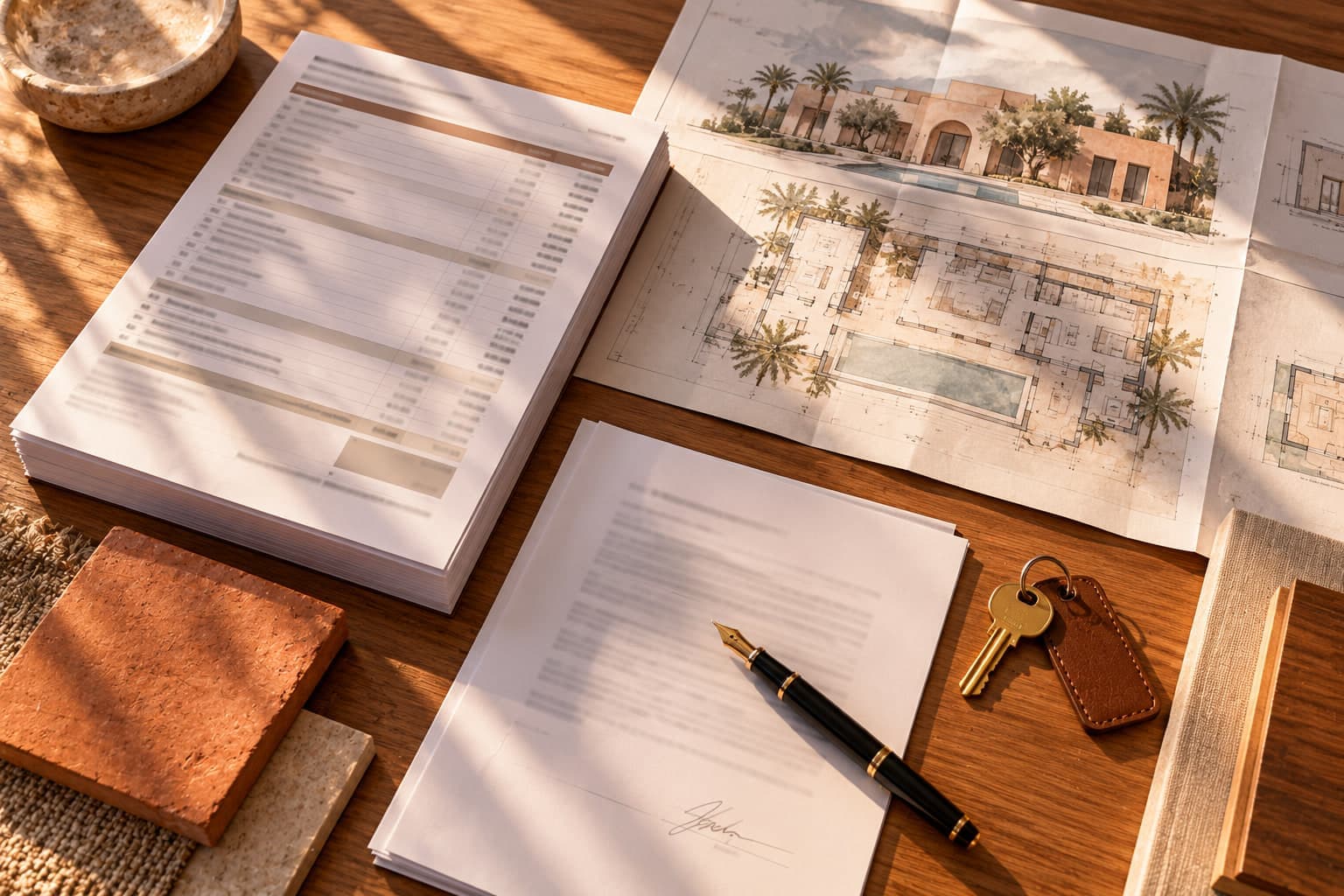
The contract must set out in black and white what you will not be able to check yourself:
- An itemised quote, line by line, with the material references.
- A schedule by phase, with the milestones that trigger payments.
- Payment instalments tied to progress that has been checked and photographed, and a retention released once the snag list has been cleared.
- The list of accepted reasons for delay and how a delay is announced and justified.
- A joint handover inspection, with a handover report, attended by you or your representative.
4. Monitoring the site without being there
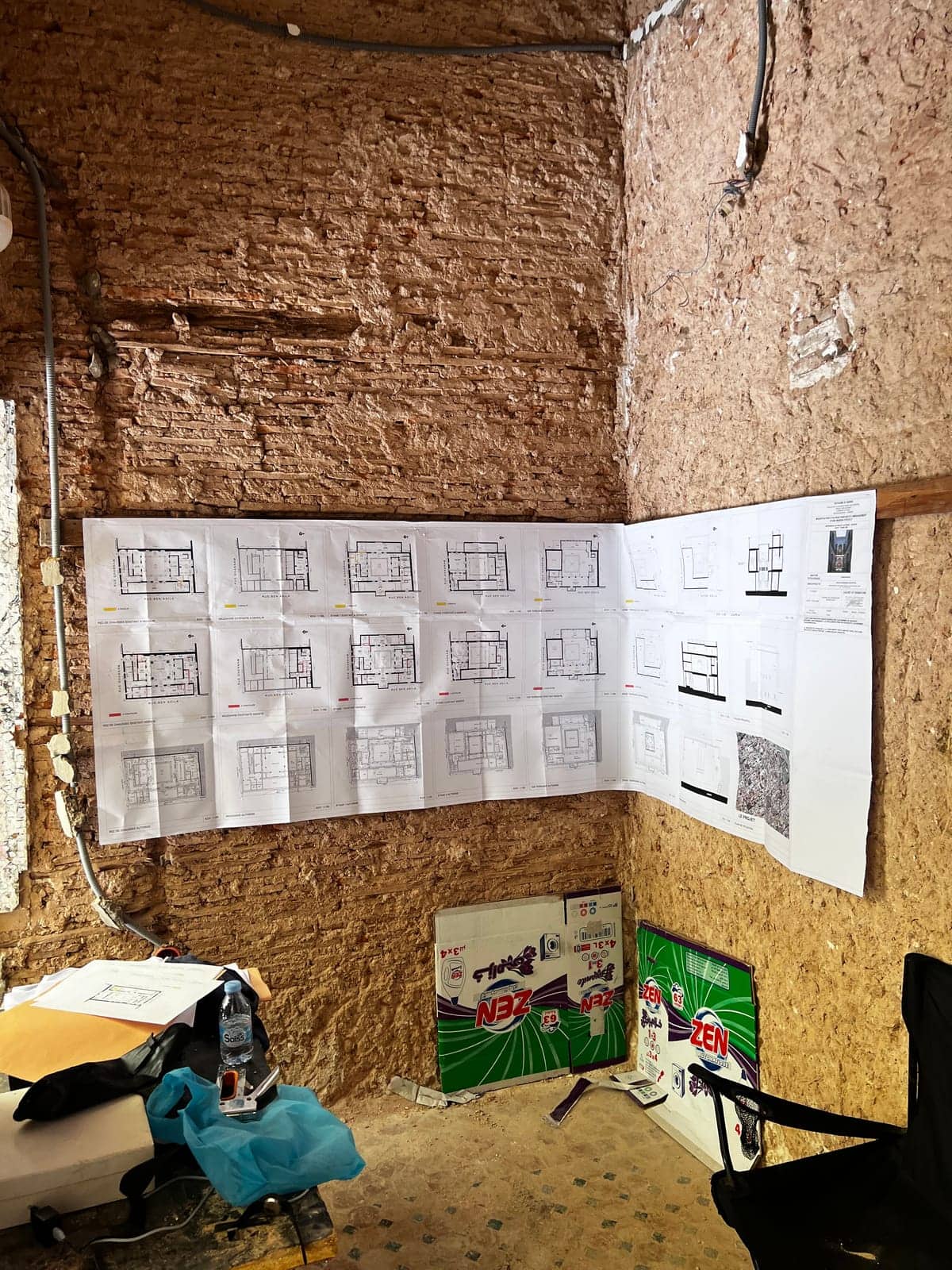
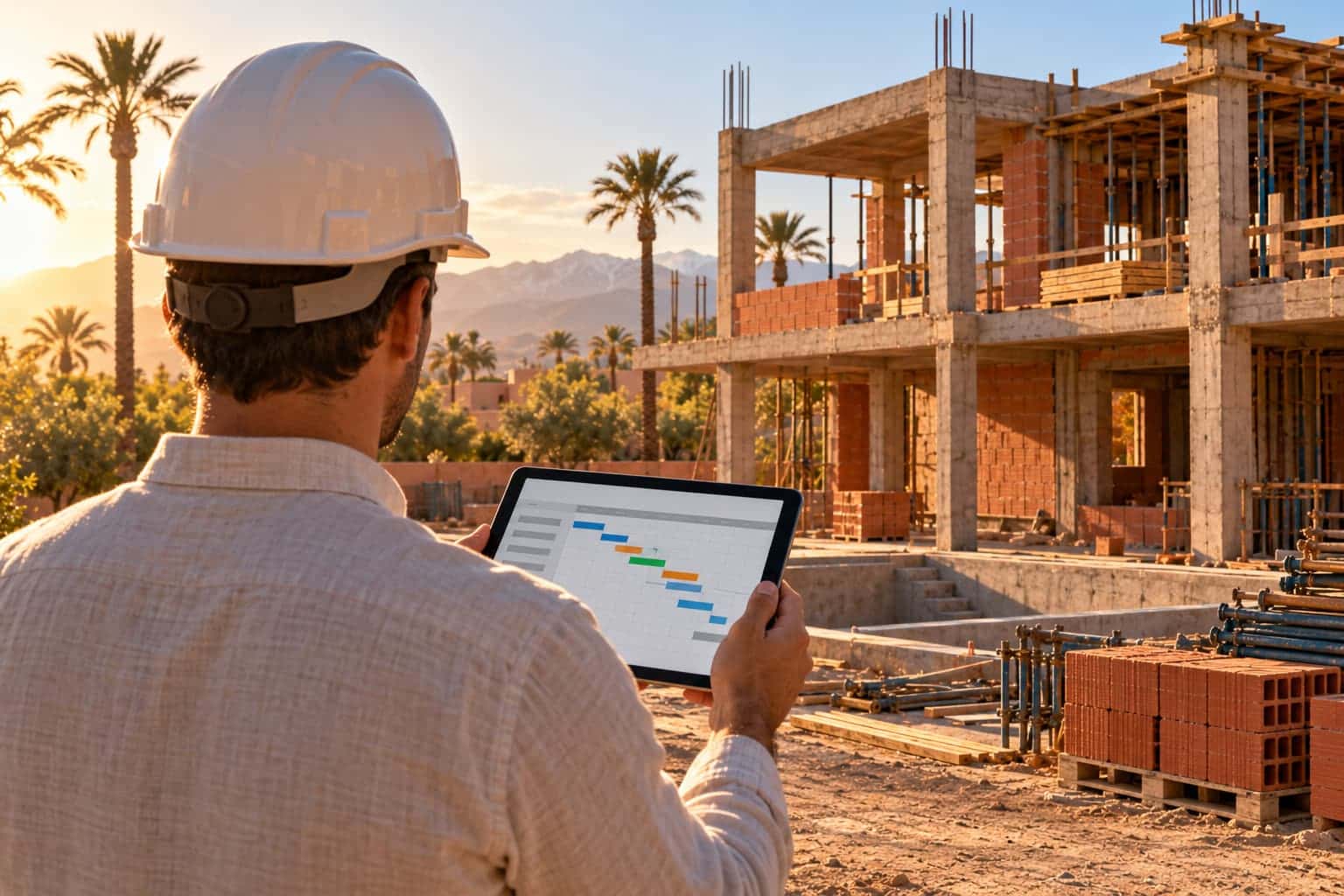
A photo report after each site visit, a schedule kept up to date task by task, plans and permits accessible at any time: this is what you should expect. Phone calls and messages are not enough, because they leave no usable record.
We designed our online client portal for exactly this: each client follows their reports, their two schedules, their documents, the samples approved by the architect, issues and payments, from anywhere. Decisions are recorded there, and the reasons for any delay are given.
5. Planning your visits
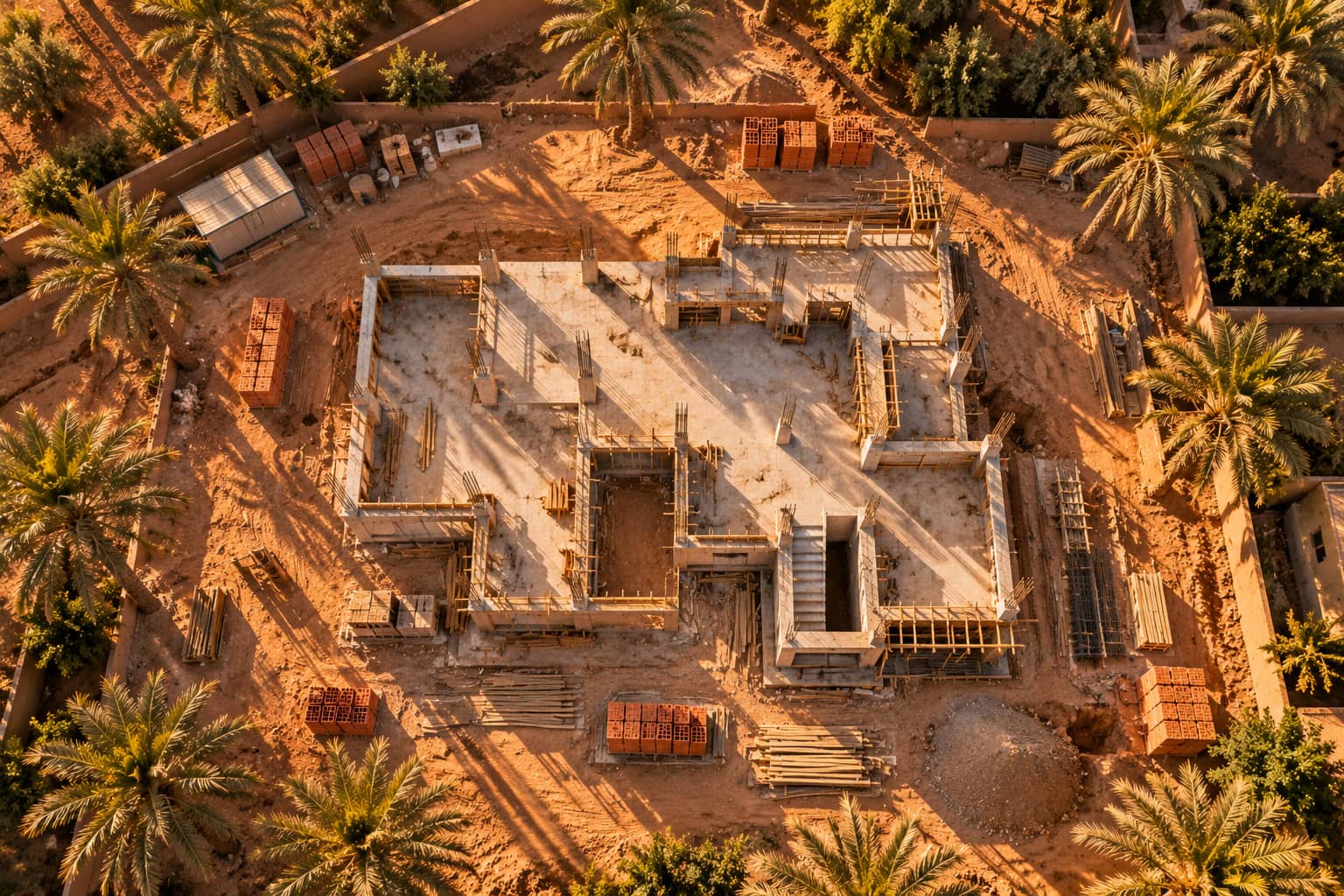
Plan your trips around the moments that matter: approval of the plans, end of the structural work, choice of finishes from samples, handover. Between visits, your representative or your architect attends the site meetings and sends you the minutes.
For aesthetic choices (tiles, zellige glazed tilework, doors and windows), ask for samples photographed in natural light, or have them shipped to you. Do not let anyone choose for you without your written agreement.
In summary
Building from abroad takes more method, not more presence. A written framework, payments against progress and online monitoring effectively replace improvised visits. That is exactly how we work with our clients, whether they are in Marrakech or in Paris.
Sources and reference texts
- Code of Obligations and Contracts (DOC)
- Law 12-90 on urban planning
Cite this guide
Using this guide on your website, on a forum, for an association or in a document? Please cite the source with a link to the original page.
“Building in Marrakech from abroad: how to run a project you cannot see”, Multi Service de Marrakech Junior, updated 9 October 2026. https://mmj.ma/en/blog/construire-a-marrakech-depuis-l-etranger
This article is provided for general information and does not replace advice from a lawyer, a notary or an architect. Legislation changes: check the version in force for your situation.