Construction monitoring: what a good site visit report should contain
The site visit report is the memory of the build and your main evidence if there is a disagreement. Here is what it should contain, who writes it, how often, and how to use it to steer your project.
Published on 9 October 2026 · Reviewed against the official texts on 9 October 2026 · By Multi Service de Marrakech Junior
1. What a site visit report is for
A building site changes every day and words are forgotten. The site visit report records, on a given date, what has been done, what remains to be done, what is causing problems and what has been decided. For the client, it is the way to follow the project without being on site. For the contractor, it is proof of its work. For everyone, it avoids arguments based on memory at handover or in a dispute.
2. The minimum content
A complete site visit report contains at least:
- The date, the people present, the weather if it has an impact, and the week of the schedule concerned.
- Progress by trade and by zone, compared with the schedule: what is finished, in progress, behind schedule, and why.
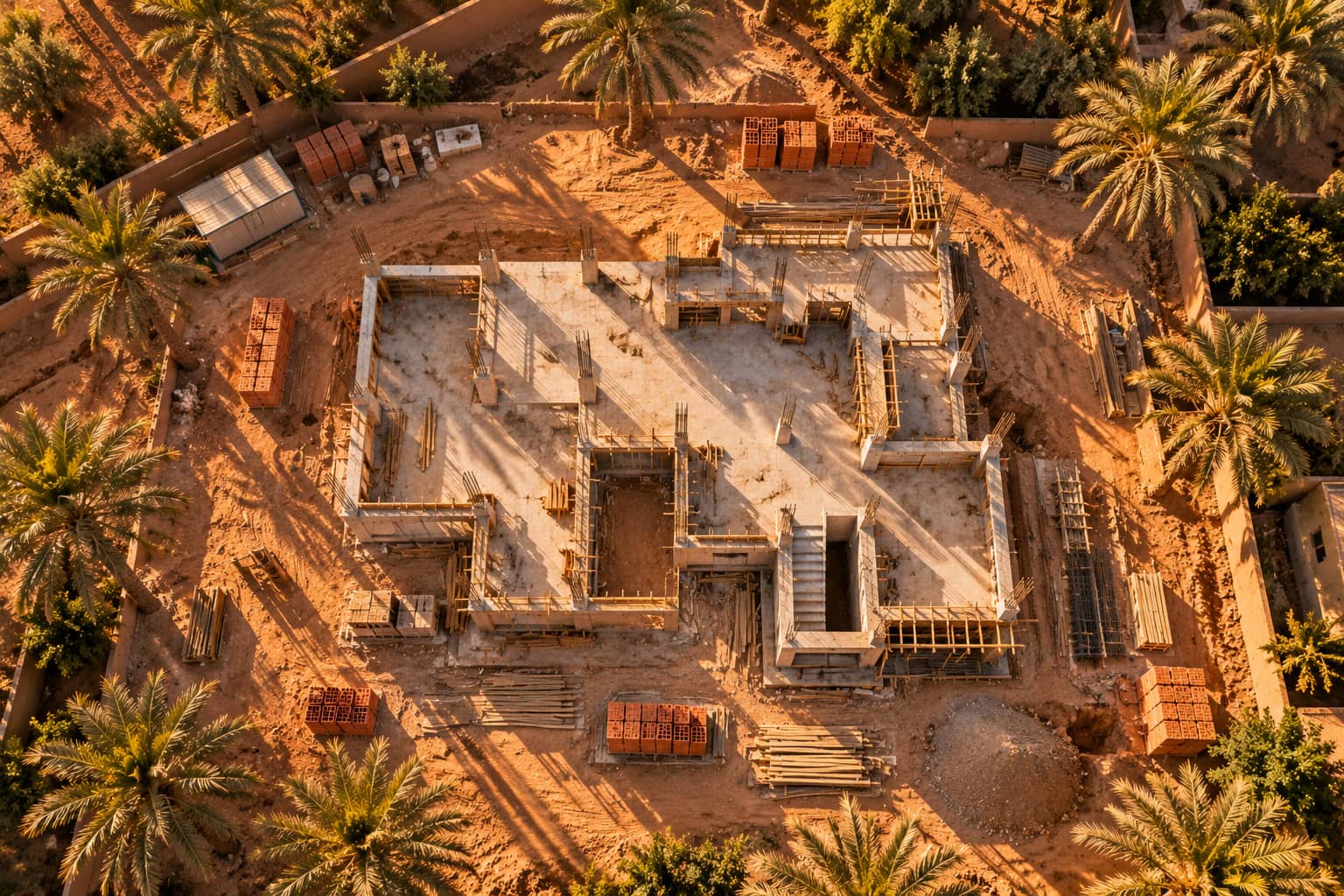
- Captioned photos by zone, stating what they show (for example “living room, services embedded before filling”).
- Points of concern: defects found, non-conformities, identified risks, and the planned follow-up.
- Decisions taken and by whom, especially those that change the plans, the materials or the schedule.
- Materials delivered and samples submitted or approved.
- Next steps and the decisions expected from the client or the architect.
3. Who writes it, and how often
On a site supervised by an architect, the architect draws up minutes of the site meetings. The contractor, for its part, documents the execution of the works: this is the site visit or progress report. The two complement each other and do not replace each other.
The frequency depends on how intense the work is. A documented visit every one to three weeks suits most houses; some critical stages (reinforcement before pouring, services before closing up) deserve photos every time, even without a full report.
4. Photos: the “before closing up” rule
Everything that will be hidden must be photographed before it is: foundations before backfilling, reinforcement before pouring, services before filling, waterproofing before it is covered. These photos are worth more than any description, and they will be invaluable years later, the day you need to drill into a wall or find a pipe.
5. From report to project management
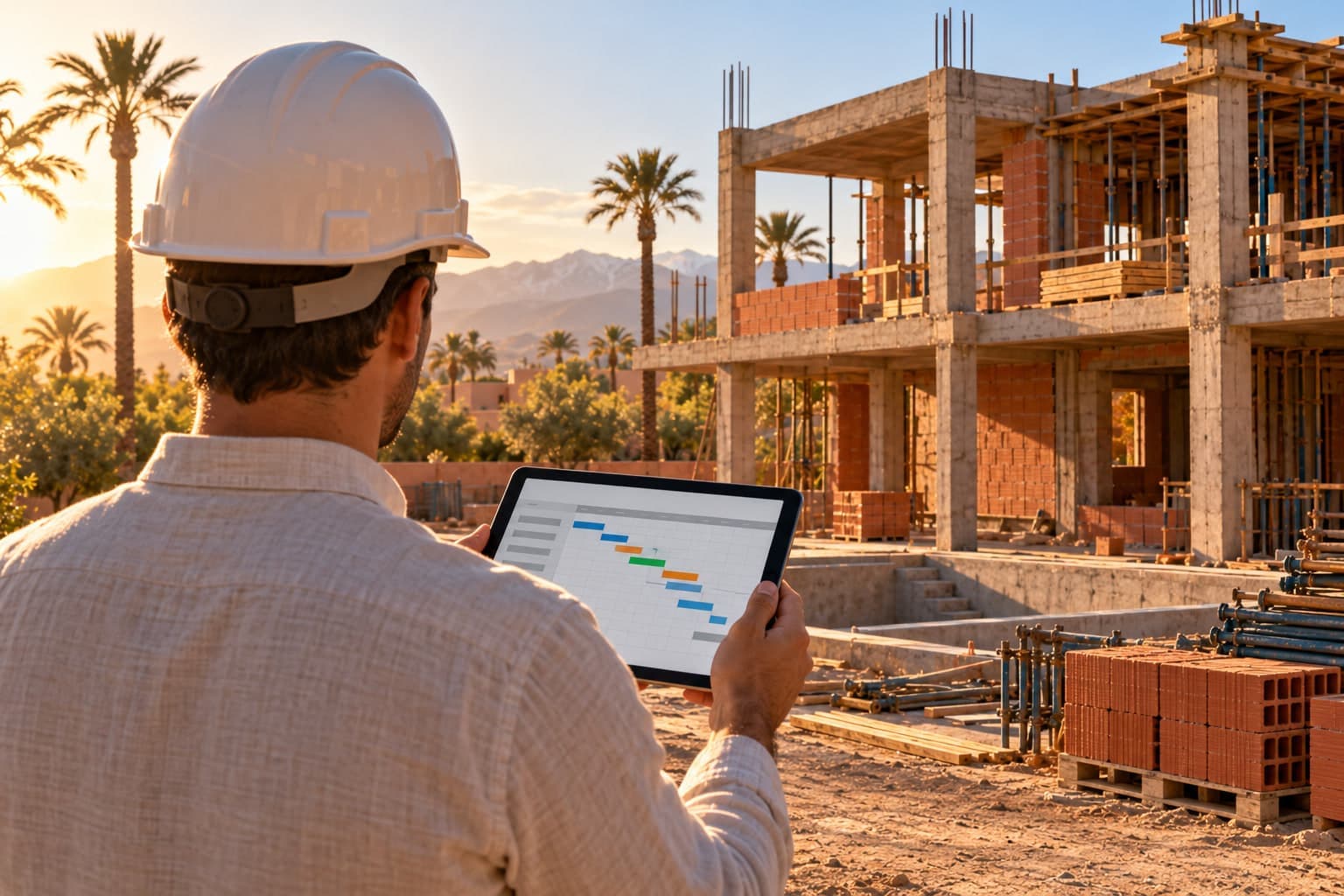
A report is only useful if it is linked to the schedule and to payments. Progress recorded in the report must be reflected in the schedule and, where applicable, trigger the request for the corresponding instalment. Conversely, any delay recorded must have a reason and a new date.
That is why we have linked all three in our client portal: each report updates the progress of the phases, each photo can be attached to a task, and payment instalments are tied to verifiable progress.
In summary
On our sites, every visit produces a photo report, published in the client portal, which feeds the schedule and the project file. At handover, the client therefore has the complete history of their house.
Sources and reference texts
- Code of Obligations and Contracts (DOC), proof of obligations
- Standard practice for site meeting minutes (supervision of the works)
Cite this guide
Using this guide on your website, on a forum, for an association or in a document? Please cite the source with a link to the original page.
“Construction monitoring: what a good site visit report should contain”, Multi Service de Marrakech Junior, updated 9 October 2026. https://mmj.ma/en/blog/suivi-de-chantier-rapport-de-visite
This article is provided for general information and does not replace advice from a lawyer, a notary or an architect. Legislation changes: check the version in force for your situation.