Building permit, subdivision permit, occupancy permit: the right order in Morocco
Confusing these three administrative acts is one of the costliest mistakes in construction. Here is how they differ, when to obtain each one, and the risks if one is left out.
Published on 10 April 2026 · Updated on 9 October 2026 · Reviewed against the official texts on 9 October 2026 · By Multi Service de Marrakech Junior
1. The subdivision permit: before buying the plot
If you are buying a plot in a subdivision (lotissement), check that the developer holds a subdivision permit (autorisation de lotir) issued by the commune (municipality). Without it, the subdivision is illegal and the plots sold cannot obtain a building permit.
The subdivision permit sets the planning rules that apply to your plot: minimum area, ground coverage ratio (COS), floor area ratio (CUS), maximum height, setbacks. These rules determine what you can build.
2. The building permit: before breaking ground
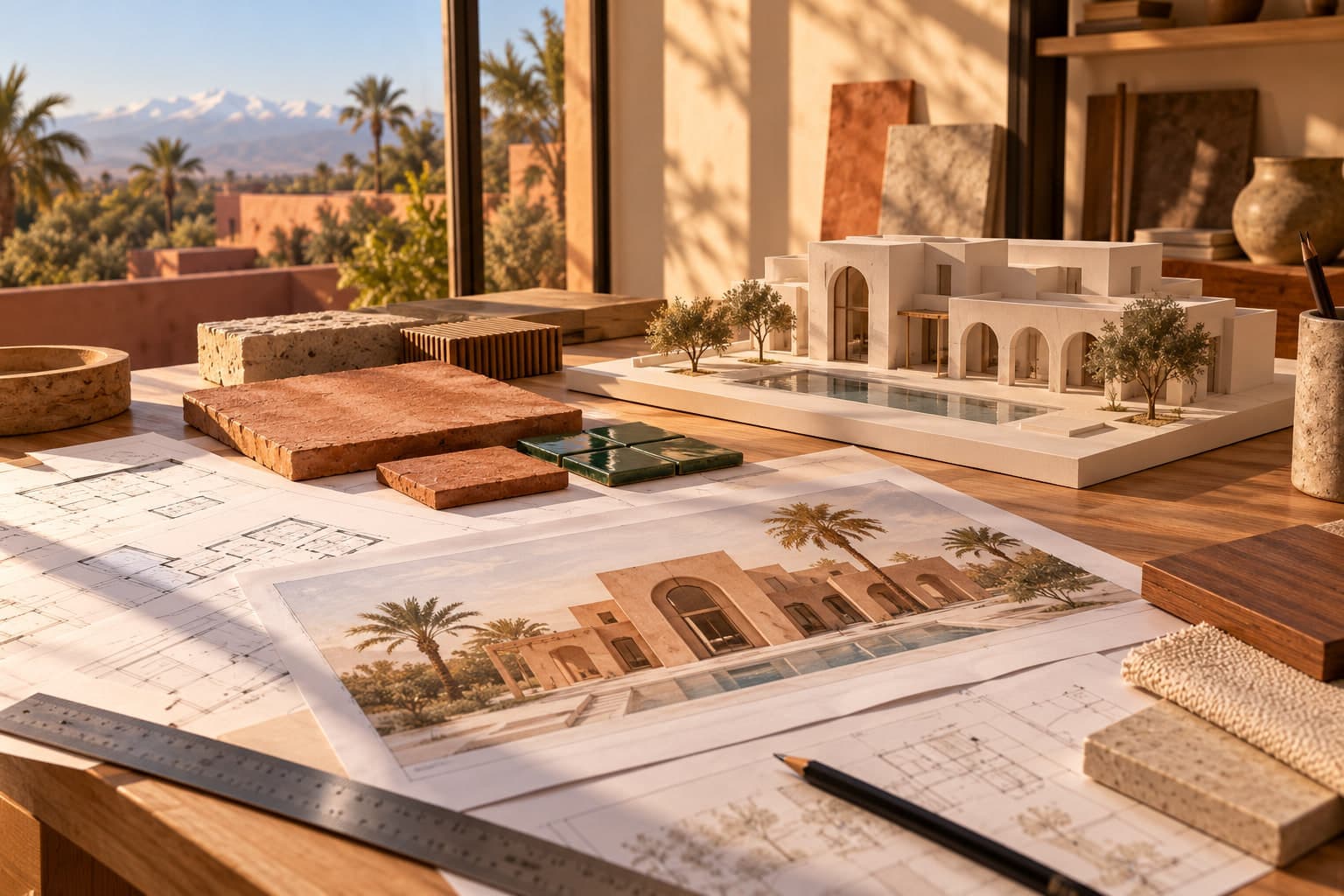
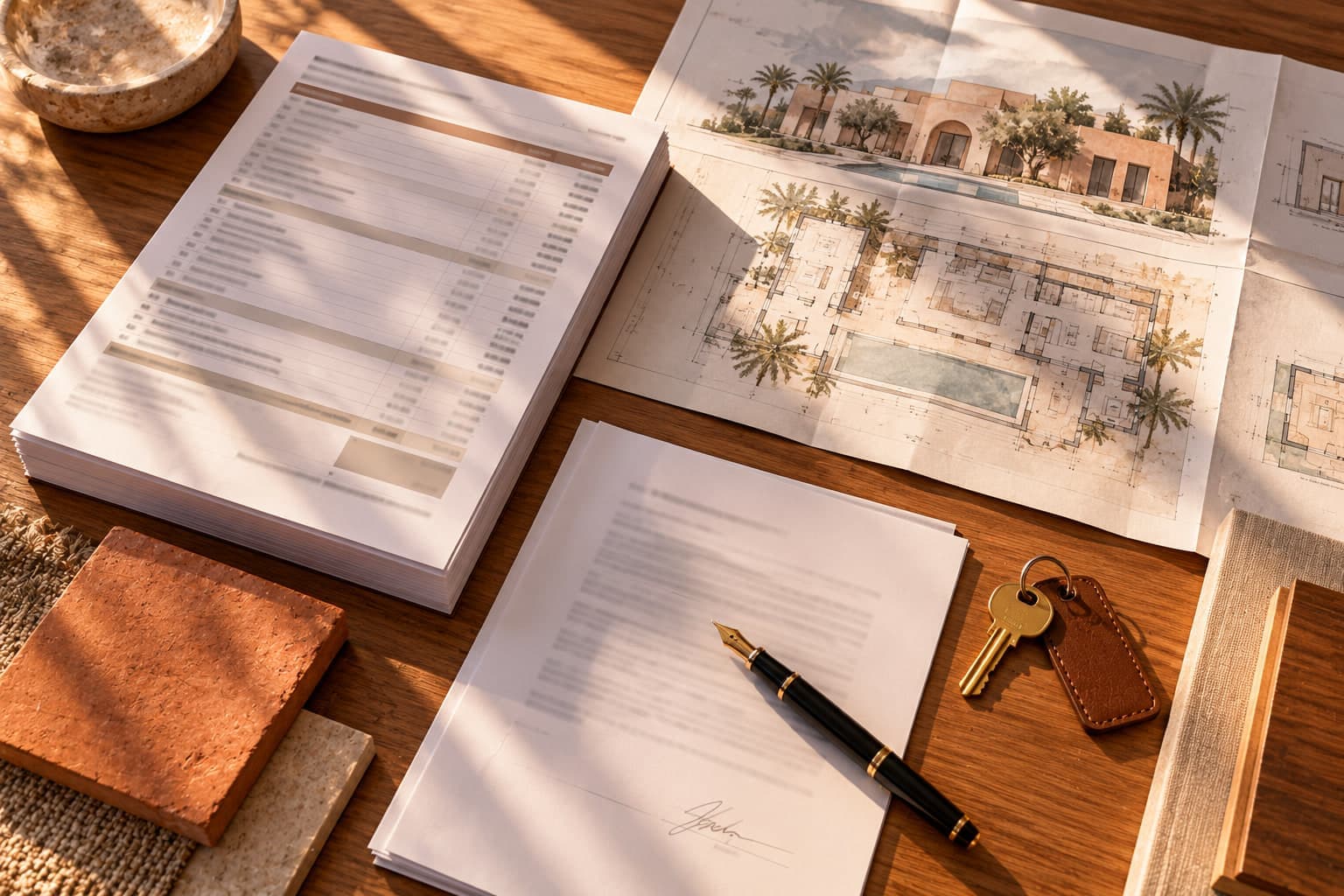
A building permit is required for any new build, extension, additional storey or change to a façade. It is issued by the municipality on the basis of a file that includes the architectural plans, the location plan, the site plan and a structural calculation report.
In urban municipalities, delimited centres, their surrounding areas and special-purpose zones, using an architect registered with the Order of Architects and specialist engineers is compulsory and a condition for obtaining the permit (Law 12-90, articles 50 to 53); for small buildings with a floor area of 150 m² or less, the architect is only compulsory for the design (article 54). This is not a formality: the architect takes on professional liability for the plans' compliance with planning rules and building standards.
3. The validity period and the risk of expiry
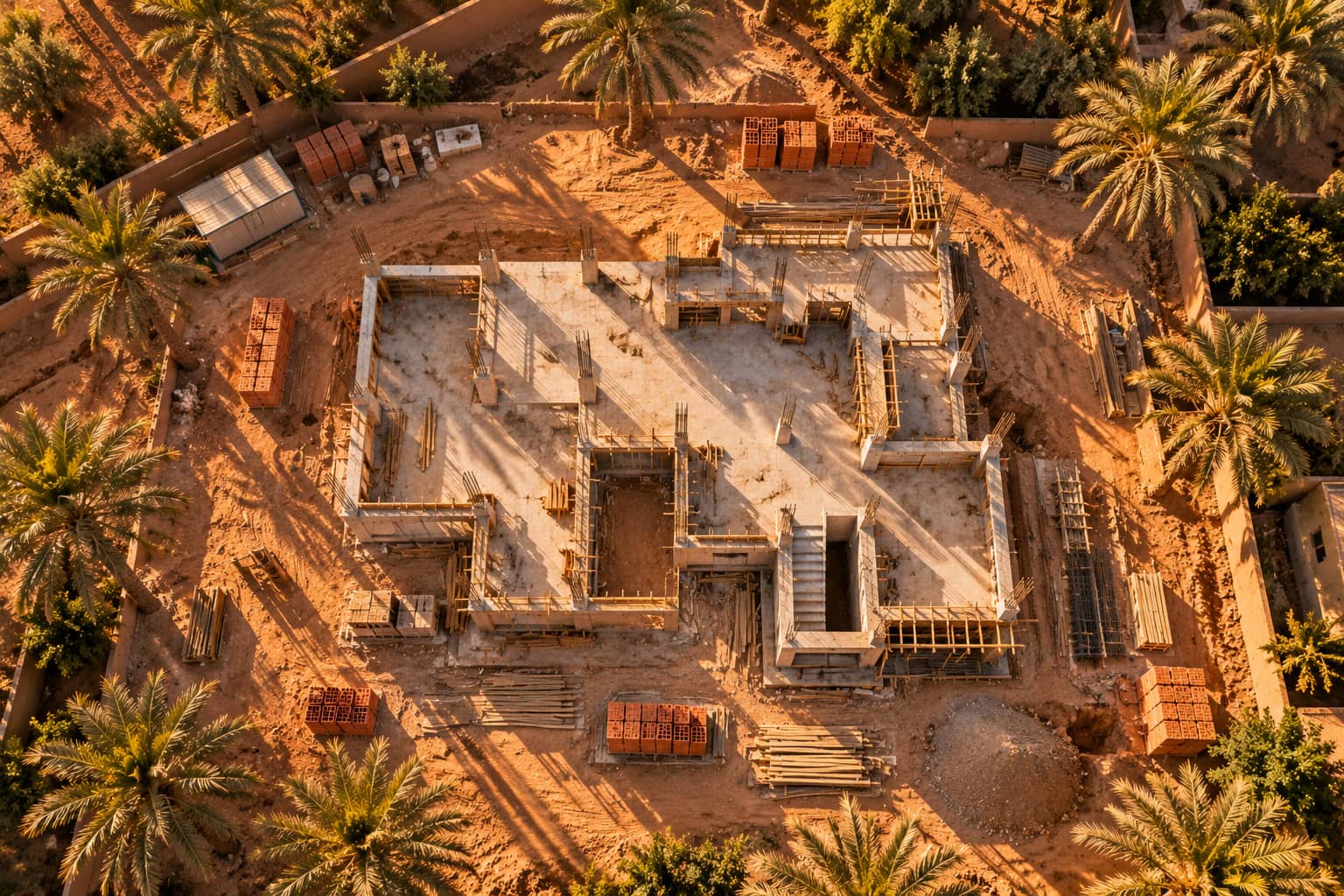
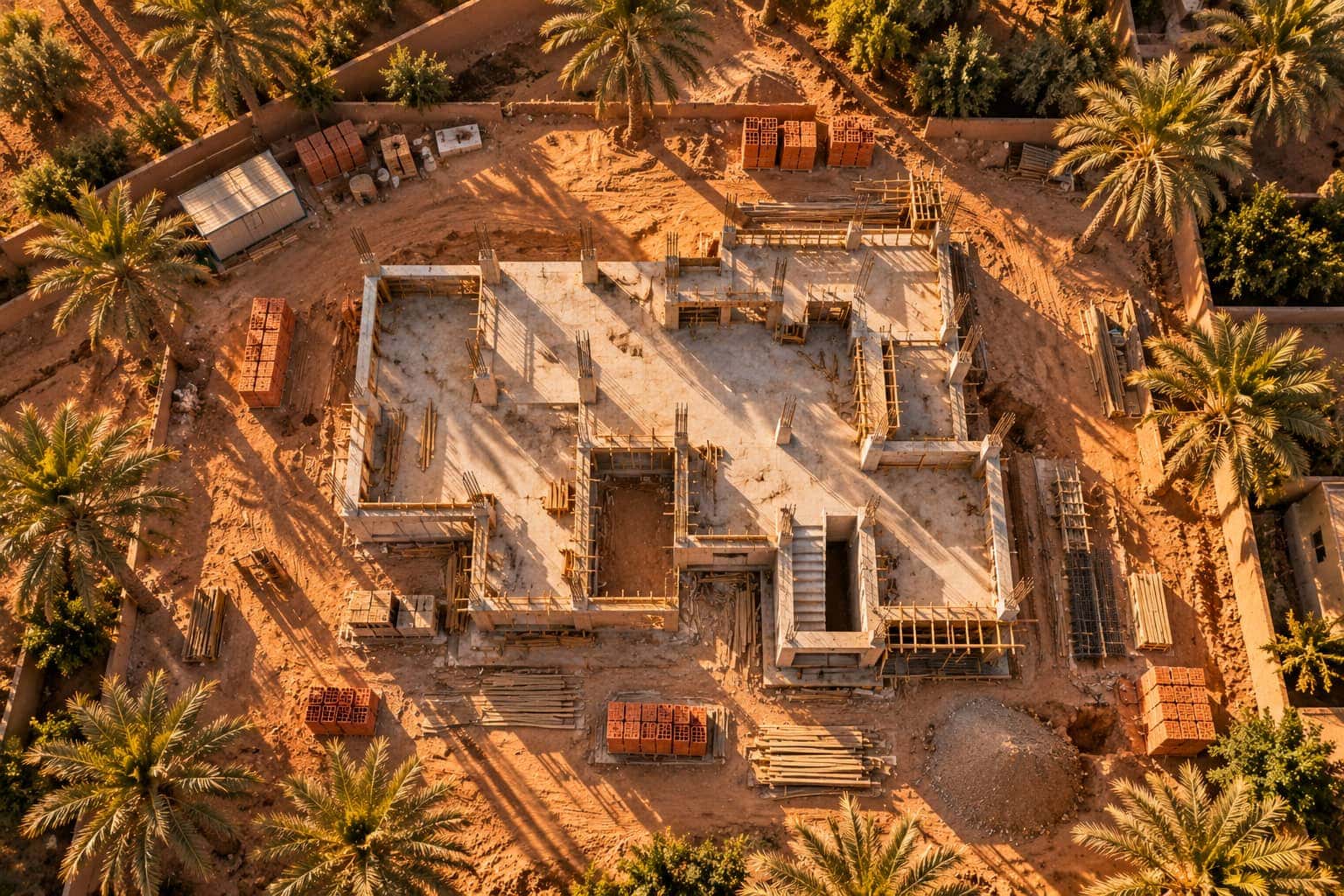
A building permit does not last for ever: it lapses if the foundation work has not begun within one year of its issue (Law 12-90, article 49). A new application must then be filed, and it is examined under the rules in force at that time.
Many owners do not realise that planning conditions may have changed between the first permit and the new application, or that a site must also be declared to the municipality when it opens and when it is completed, with a site sign board and a site logbook (cahier de chantier) kept by the architect (Law 12-90, articles 54-1 and 54-2).
4. The occupancy permit: after the works are completed
Once the works are finished, the owner must file a declaration of completion of works and apply for the occupancy permit (permis d'habiter), or for the certificate of conformity in the case of buildings not intended for housing (Law 12-90, article 55). This document certifies that the building as built complies with the permit granted. It is issued after an inspection of the completed works (récolement), or on the certificate of the architect who supervised the works; if the municipality has not replied within a month, the owner can refer the matter to the local authority.
Without an occupancy permit, living in the building is an offence (a fine of 2,000 to 10,000 MAD, and 10,000 to 100,000 MAD if the property is rented out or sold, article 75), utilities in practice refuse the permanent connection to the networks, and resale or inheritance becomes more complicated.
5. Penalties for non-compliance
Law 66-12 rewrote the penalties in Law 12-90: building without a permit, 10,000 to 100,000 MAD; failing to comply with the permit (height, floor area, siting), 10,000 to 50,000 MAD, and 50,000 to 100,000 MAD with possible imprisonment for an added floor; changing a façade without authorisation, 2,000 to 20,000 MAD; fines doubled for a repeat offence (articles 71 to 80). The inspector orders work to stop immediately, the local authority can demolish a building without a permit on its own authority, and the court orders demolition or compliance work at the offender's expense, even if the building has been lived in for years.
Regularisation after the fact is possible in some cases, through a regularisation permit granted after the opinion of the urban planning agency (article 40), but it is costly, uncertain and does not cancel any prosecution. It is always better to prevent than to regularise.
In summary
Multi Service de Marrakech Junior helps its clients read planning documents and check that the project complies before work starts. We coordinate with the architect so that the permit is obtained before breaking ground.
Sources and reference texts
- Law 12-90 on urban planning (Dahir 1-92-31 of 17 June 1992), articles 40 to 58, as amended by Law 66-12
- Law 25-90 on subdivisions, housing groups and land divisions
- Law 66-12 on planning and building offences (Dahir 1-16-124 of 25 August 2016, Official Bulletin No. 6501 of 19 September 2016)
- The Rokhas platform
Cite this guide
Using this guide on your website, on a forum, for an association or in a document? Please cite the source with a link to the original page.
“Building permit, subdivision permit, occupancy permit: the right order in Morocco”, Multi Service de Marrakech Junior, updated 9 October 2026. https://mmj.ma/en/blog/autorisations-construction-maroc
This article is provided for general information and does not replace advice from a lawyer, a notary or an architect. Legislation changes: check the version in force for your situation.