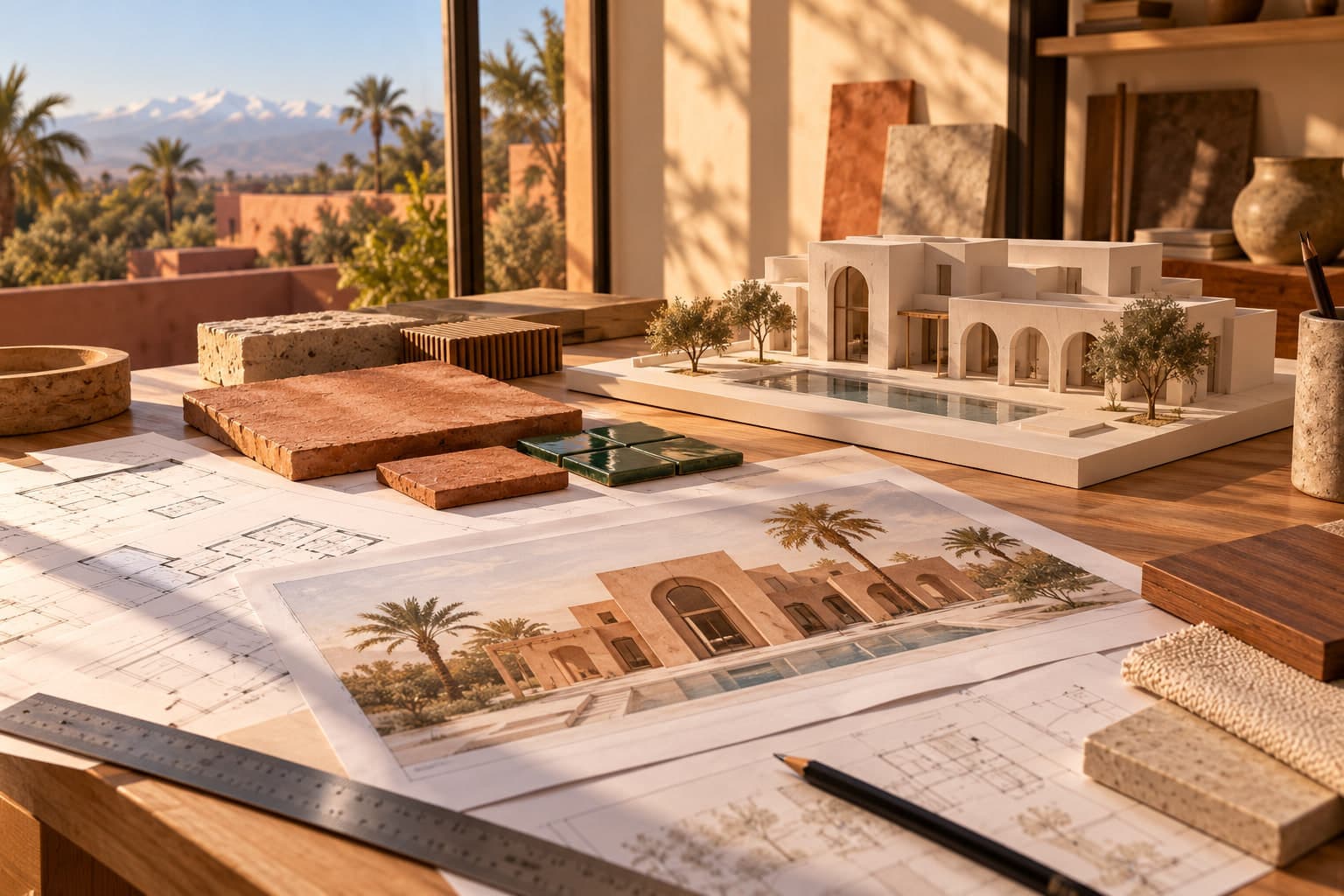
Renovating or restoring a riad: where to start, and in what order
A riad is restored in a precise order: understand, protect, strip, strengthen, and only then embellish. A look at the method we apply on a riad in the Rabat medina, and at the pitfalls to avoid.
Published on 9 October 2026 · Reviewed against the official texts on 9 October 2026 · By Multi Service de Marrakech Junior
1. Understand before acting: the condition survey
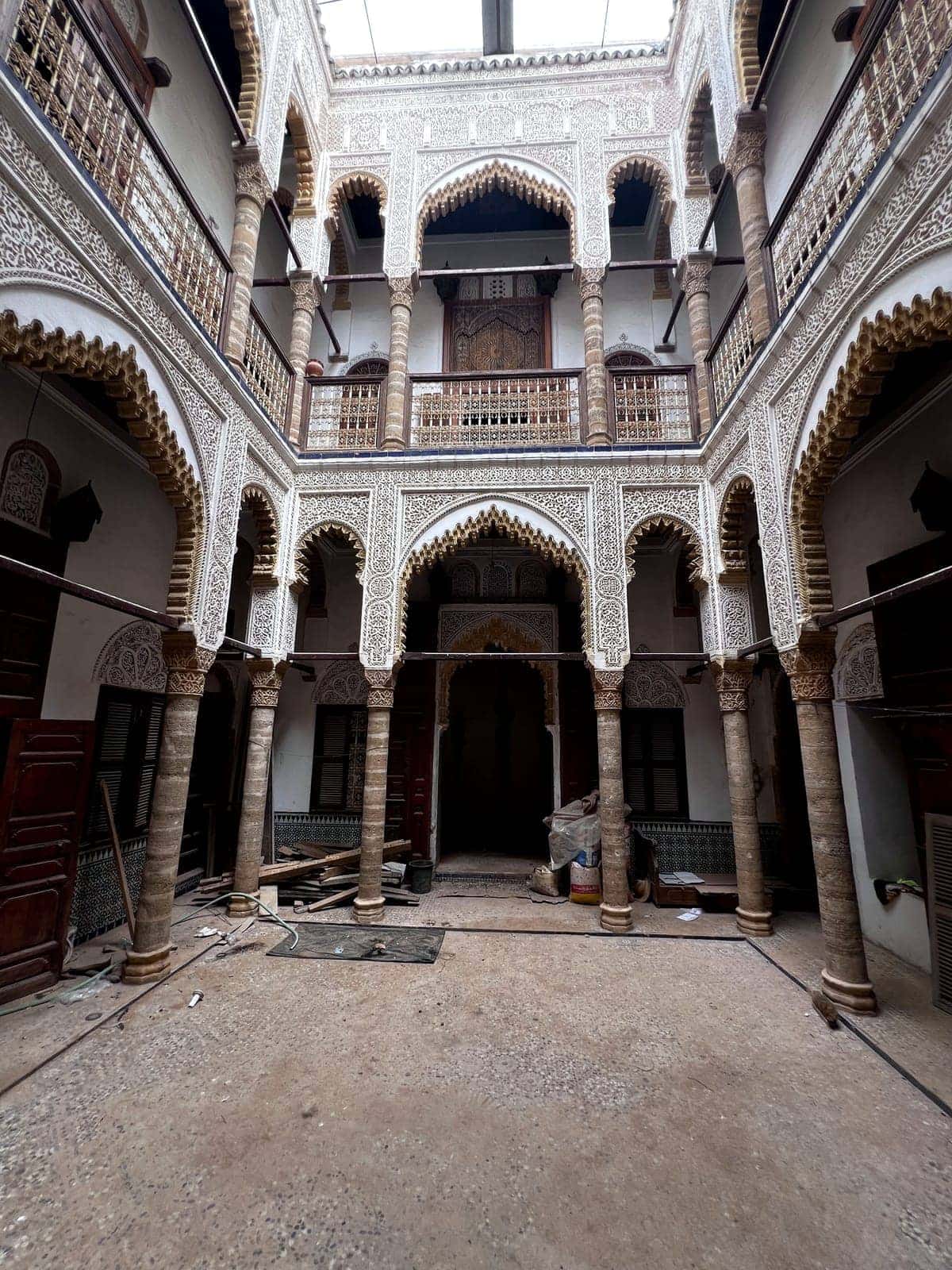
An old riad hides its problems behind its renders: weakened timber floors, cracked walls in rammed earth (pisé) or fired brick, decaying roof structures, wiring and plumbing improvised over the decades. The first visit is used to record everything, room by room, in dated photos: what must be protected, what is doubtful, what must be replaced.
On the riad we are restoring, this initial visit identified a collapsed floor, a roof terrace structure to be replaced, recent cracked concrete-block masonry and, on the other hand, remarkable decorative heritage to be preserved in full.
2. Protect, remove, store
Before any stripping, the decoration is protected: tarpaulins stretched over the courtyard, nets under the painted ceilings, column shafts and capitals wrapped. The original joinery, carved doors, mashrabiya screens and wrought-iron railings are removed, numbered, wrapped and stored.
The old floor coverings, bejmat (terracotta tiles) and zellige (glazed tilework), are carefully lifted, sorted and kept to be relaid. A common mistake is to throw them out with the rubble: what cannot be remade identically is then lost.
3. Strip back to read the structure
Stripping the renders, from top to bottom, exposes the stone, the brick and the old conduits. This is when the real structure appears and the structural engineering consultancy can decide: which wall is load-bearing, which floor needs rebuilding, which lintel needs replacing.
This is also when the major choices are made. On our site, replacing the timber floors with solid concrete slabs was studied, approved on drawings and structural calculations by the architect and the structural engineering consultancy, then added to the schedule with the reason for it. Nothing was decided on site by guesswork.
4. Strengthen, then install the services
Next comes the structural work: demolition of non-load-bearing partitions, rebuilding damaged walls in brick, propping and rebuilding floors, lintels, slabs. The new services (electricity, water, drainage) are embedded zone by zone and photographed before being closed up, then the wall chases are filled.
The order matters: no render, no carved plaster, no zellige is applied until the structure and the services are finished and checked. Reversing the order to “move faster” always costs more in the end.
5. Permits and professionals
Work on the structure or façades of a riad requires a permit, filed by an architect; demolition, even partial, requires a demolition permit (Law 12-90, article 63-1). In the medina, some areas are protected under Law 22-80 and the application goes through specific departments. Allow for this time in the schedule.
On the team side, a riad calls on rare trades: master craftsmen (maâlems) in carved plaster, zellige, cedar wood and tadelakt (polished lime plaster). The company must know how to coordinate them with the modern trades, and the architect must approve samples before each installation.
6. Budget and schedule: planning for the unexpected
In old buildings, some unknowns remain until the stripping is done. A serious quote says so: it details everything that is known, line by line, and sets aside a provisional sum for the structural repairs, which will be priced after assessment in an additional quote approved in writing.
The schedule is built in phases with control milestones. Every delay must have a written reason and a new date: it is the only way to keep trust on a twelve-month project.
In summary
Restoring a riad means accepting a slower start in order to move faster later. Protect, understand, strengthen, then embellish: this order protects your heritage and your budget. We document it visit after visit in the client portal of each project.
Sources and reference texts
- Law 12-90 on urban planning (authorisations for alterations)
- Law 22-80 on the conservation of historic monuments and sites (protected areas)
Cite this guide
Using this guide on your website, on a forum, for an association or in a document? Please cite the source with a link to the original page.
“Renovating or restoring a riad: where to start, and in what order”, Multi Service de Marrakech Junior, updated 9 October 2026. https://mmj.ma/en/blog/renover-un-riad-par-ou-commencer
This article is provided for general information and does not replace advice from a lawyer, a notary or an architect. Legislation changes: check the version in force for your situation.